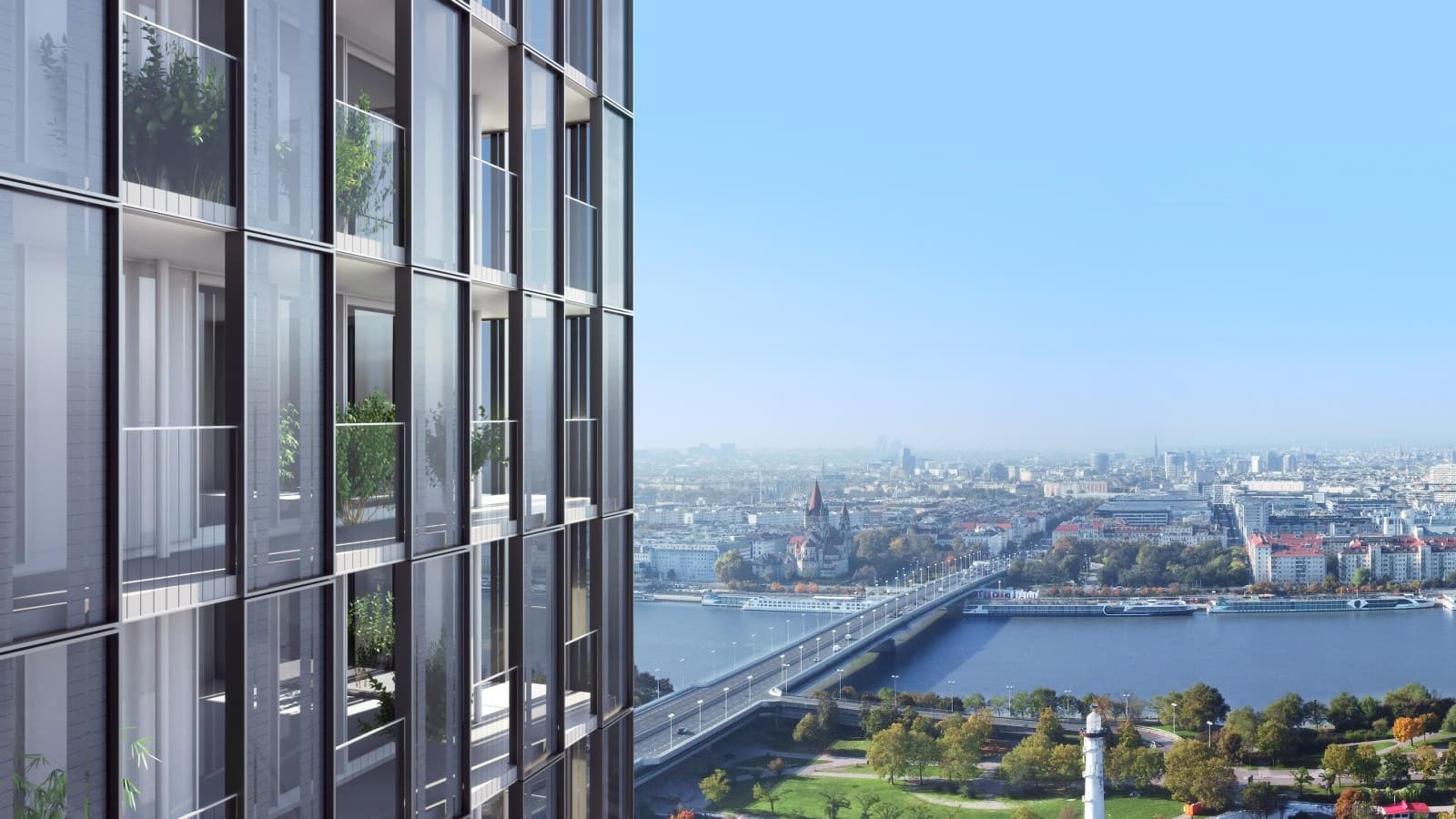
Electricity from the façade DC2 Tower, Vienna (AT)
With photovoltaic panels on the façade and plenty of Geberit expertise inside, a new landmark is rising in Vienna’s Donau City: the DC2 Tower combines a high quality of life with efficient building services across 175 metres.
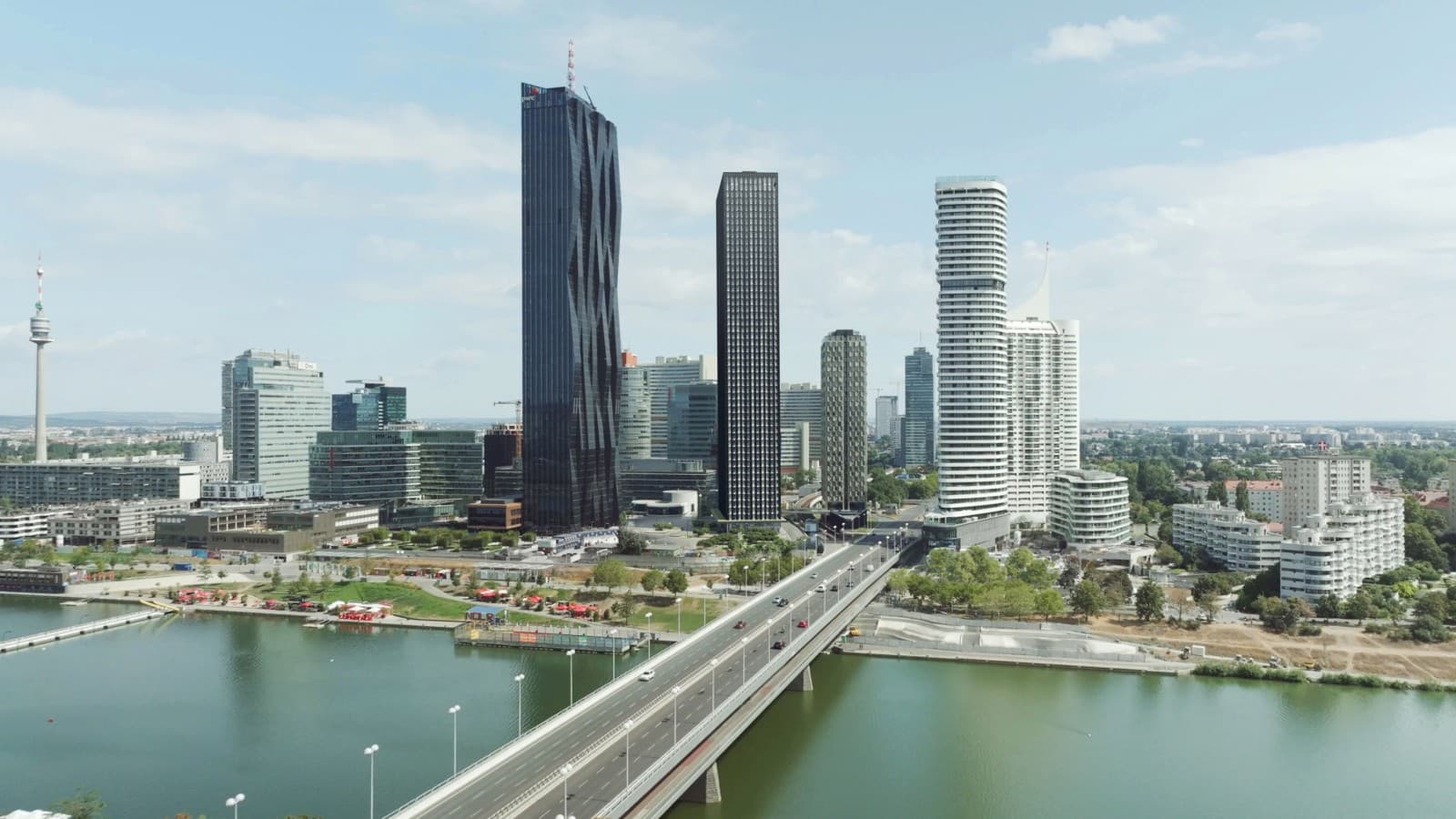
Donau City is one of Vienna’s (AT) most significant urban development areas. With the DC2 Tower, a building is taking shape there that combines a variety of uses: modern office space is being created on the lower floors, with more than 300 rental flats above.
The high-rise was designed by the renowned French architect Dominique Perrault. With this project, he is setting a benchmark for energy efficiency and a high quality of life.
The project is aiming for Platinum certification under the internationally recognised LEED standard. The photovoltaic panels integrated into the façade generate electricity whilst also defining the building’s appearance.
Wrapping loggias offer residents space to spend time outdoors, whilst the projecting façade elements provide shade and shelter from the wind.
Efficient installation
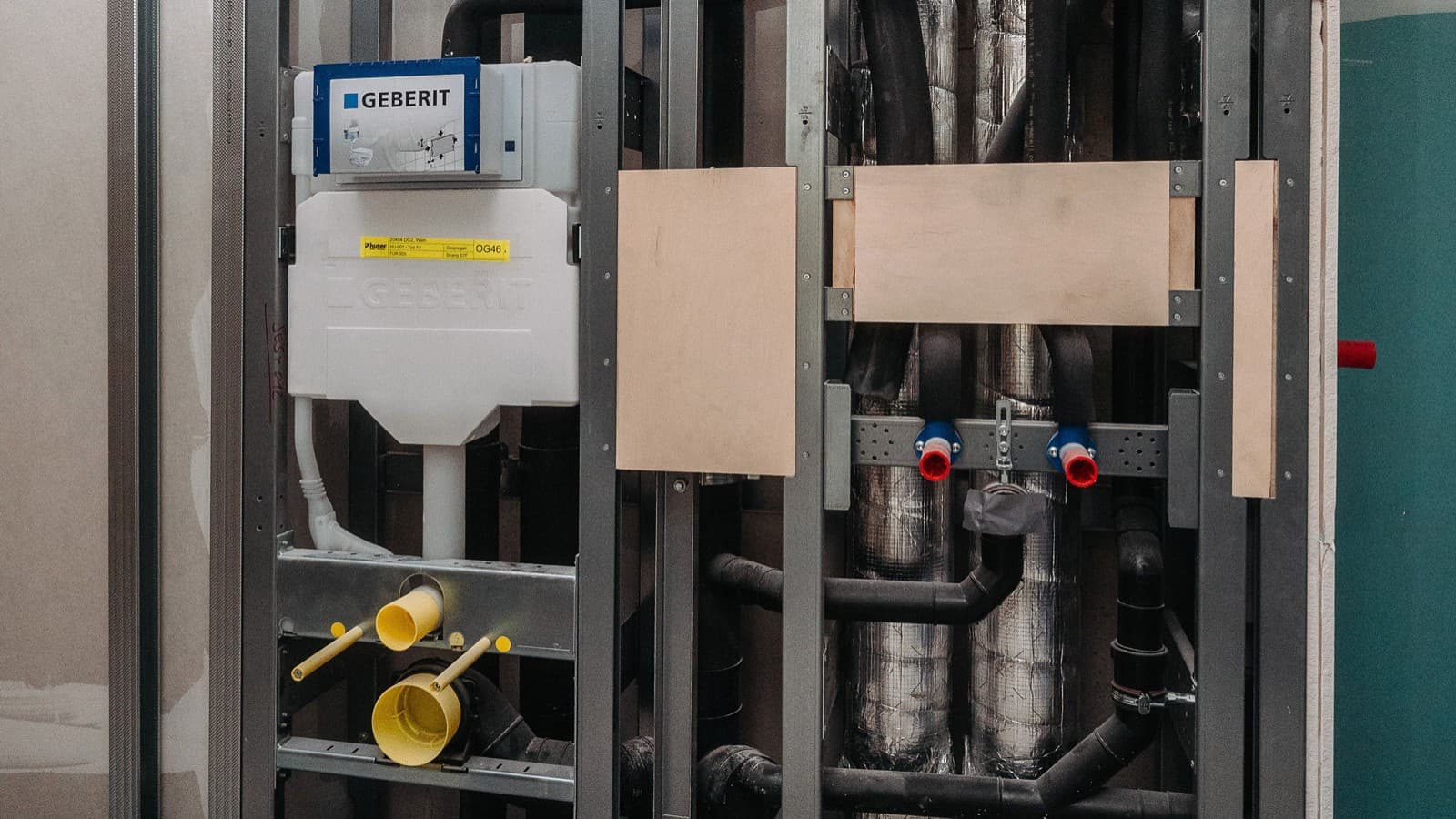
The flats feature the highly sound-insulating Geberit Silent-db20 drainage system and prefabricated installation units from Geberit Huter.
The units were delivered directly to the building site with pre-installed cisterns, supply pipes and waste water pipes – a significant time-saver for the on-site plumbers.
Efficient drainage
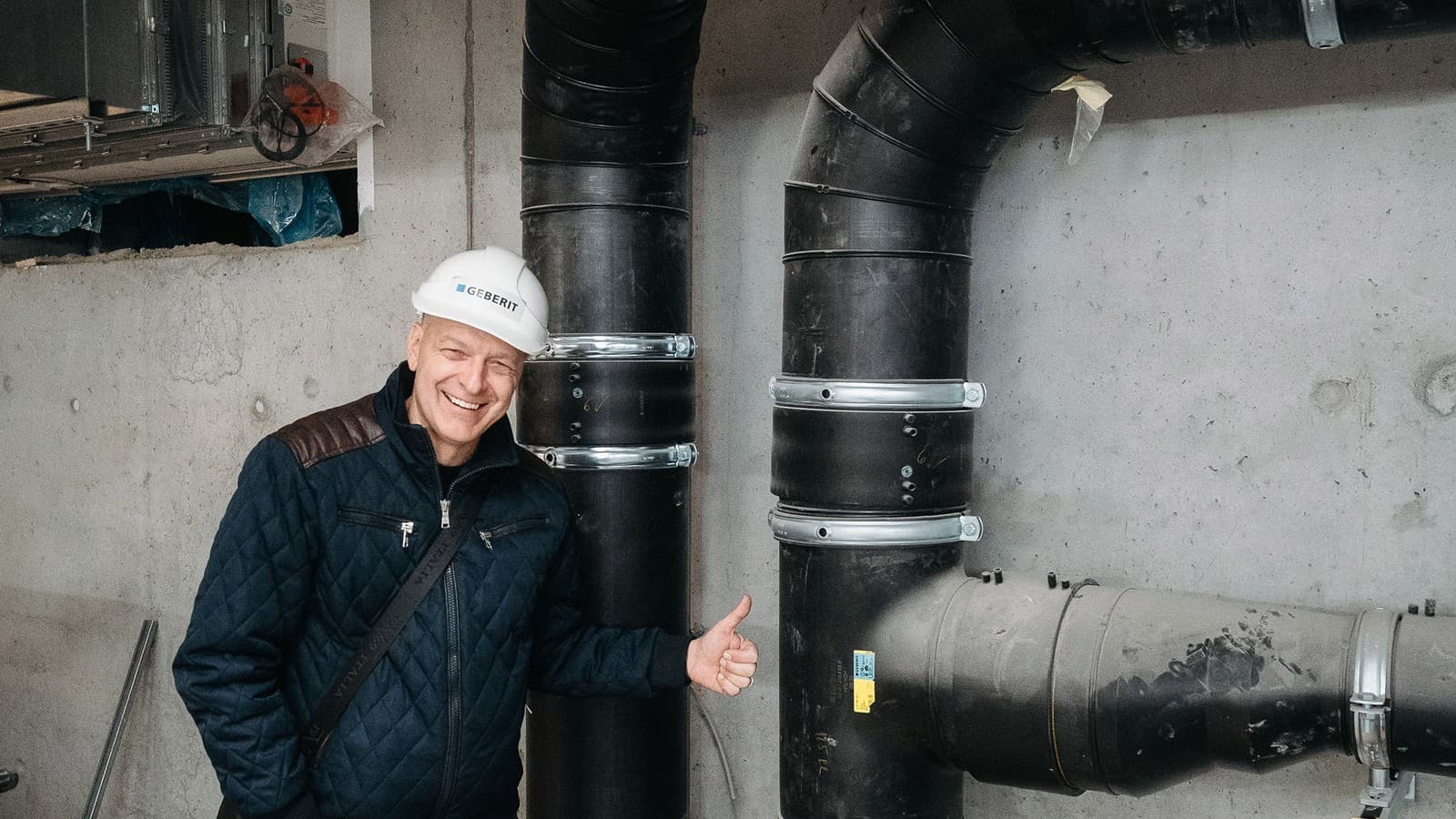
Due to the numerous loggias, ensuring reliable rainwater drainage is particularly challenging: large volumes of water accumulate there during heavy rain. The project therefore relies on a combination of conventional drainage and the Geberit Pluvia siphonic roof drainage system. The rainwater first flows into a retention tank, from where it is then drained via the Geberit Pluvia system.
“With a purely conventional drainage system, the collection pipes would have had to be very large,” explains Matthias Mittlinger, technical manager at Heiz Hofstätter, the building services contractor carrying out the work. This would have resulted in a significant loss of space in the garage.
Pluvia, on the other hand, requires significantly smaller pipe diameters and no gradient thanks to the negative pressure in the pipes. The collected rainwater is used to water the green spaces around the building.
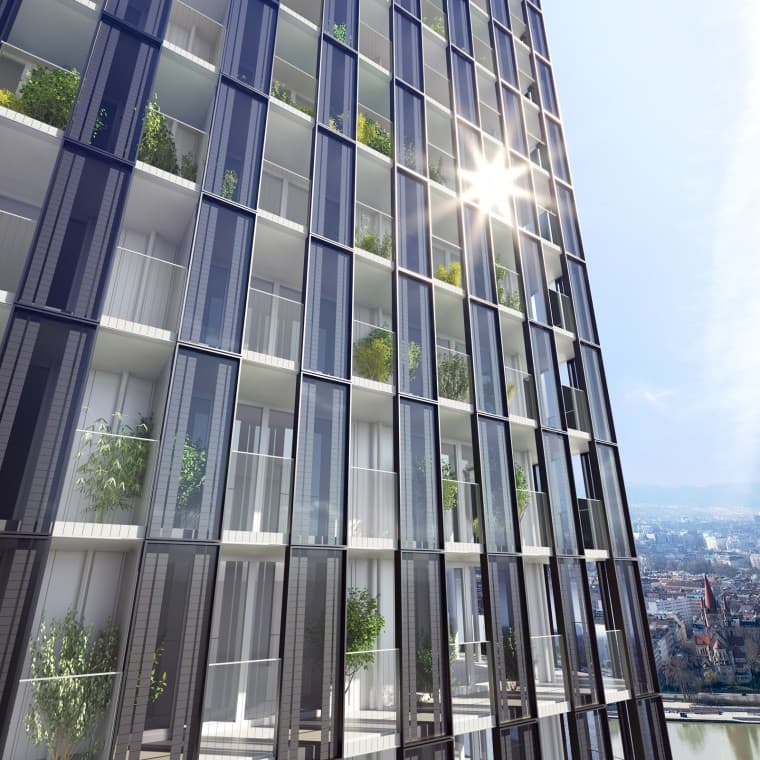
The DC2 Tower’s photovoltaic façade generates electricity and defines the high-rise’s appearance (Visualisierung: © Office Le Nomade).
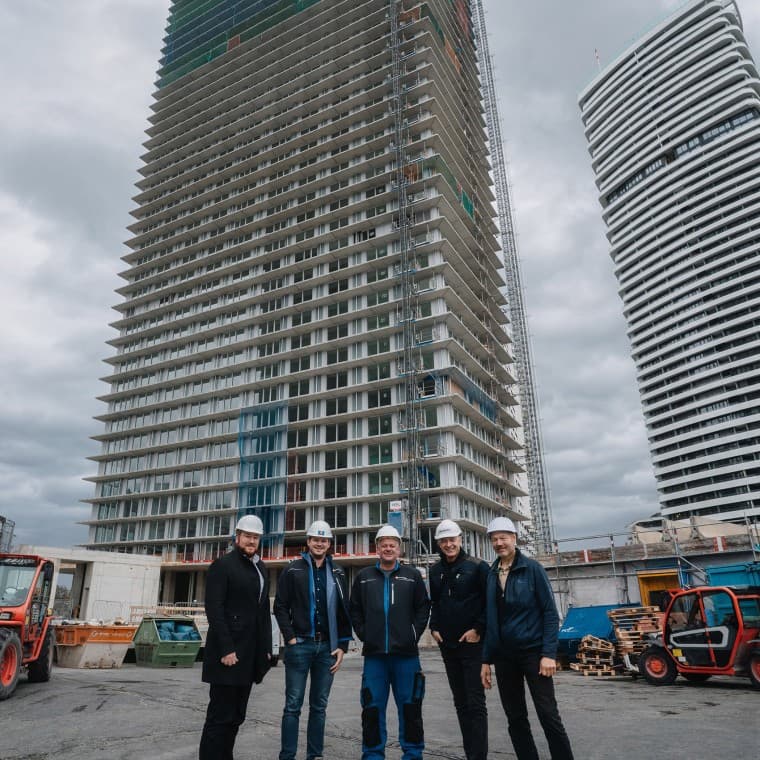
Harald Kernbichler, Matthias Mittlinger and Markus Höfler (all three from Heiz Hofstätter), together with Rudolf Stieber and Christian Pall from Geberit (from left to right) (© Tobias Singer).
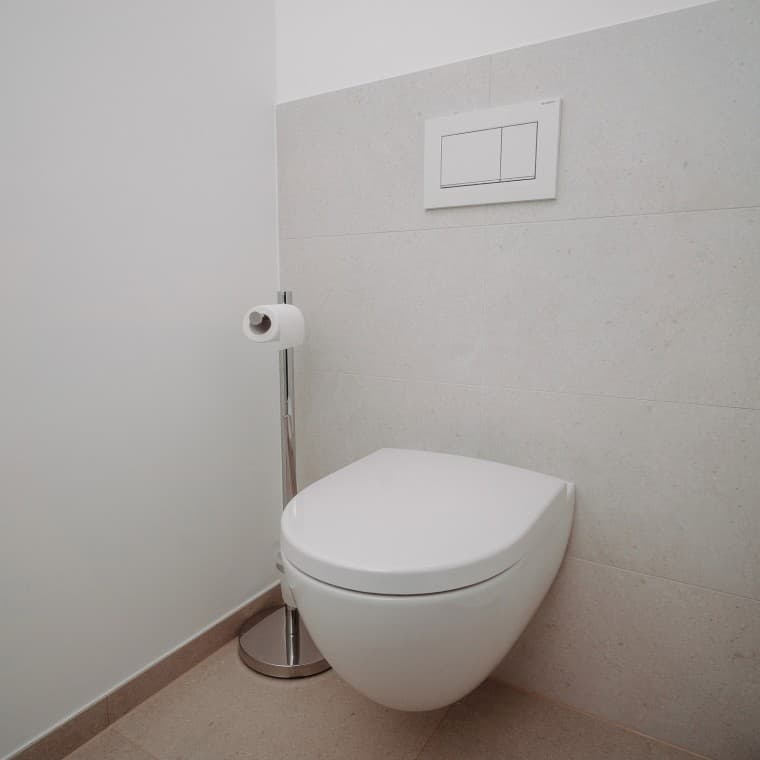
500 Geberit WC ceramics and 500 flush plates have been installed in the DC2 Tower (© Tobias Singer).
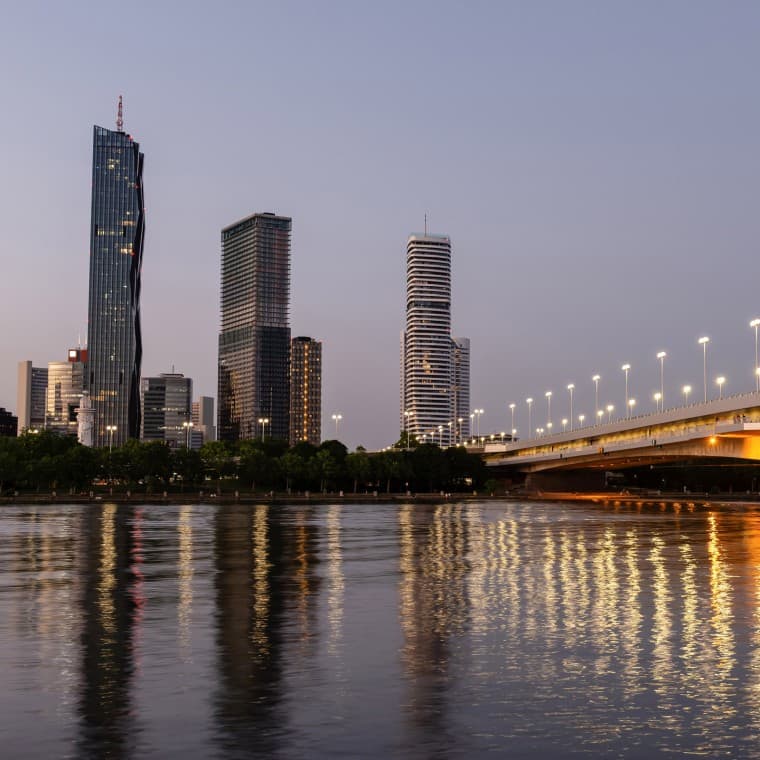
The DC2 Tower is being built between the DC Tower (left) and the Danube Flats (right) (© Adobestock, Yevhenii Rukavitsyn).
Facts
Geberit Know-how
Geberit products used in the project
- Pluvia roof drainage
- Silent-db20
- PE-HD
- Silent Pro
- Silent-PP
- Mepla
- Mapress Therm
- Mapress Stainless Steel
- WC ceramic appliances
- Preda urinals
- Concealed cisterns and actuator plates
- Huter installation elements
- Huter shaft components

Geberit Pluvia
The syphonic roof drainage system ensures efficient and reliable performance even during heavy rainfall. Geberit Pluvia impresses with its design flexibility during planning and its cost-effectiveness in both installation and operation.
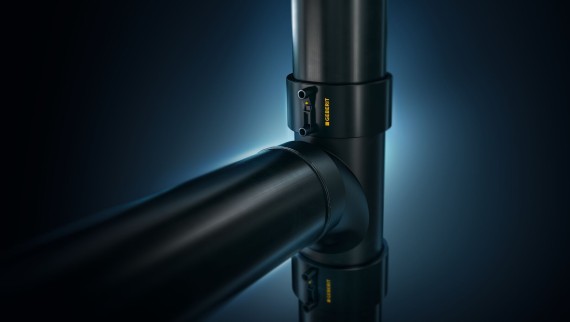
Geberit Silent-db20
From stacks to floor connections, the highly sound-insulating Geberit Silent-db20 drainage system offers an outstanding solution for projects with high sound insulation requirements.
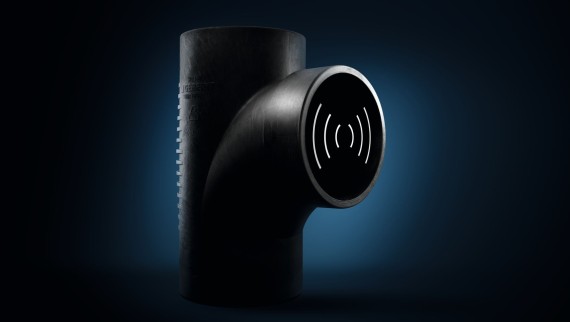
Geberit PE
Geberit PE is suitable for a wide range of drainage applications in technical building systems and industry thanks to its shockproof properties and resistance to chemicals.

Geberit Silent-PP
Geberit Silent-PP is a sound-optimised drainage plug-in system that offers a cost-effective alternative for projects with moderate sound insulation requirements.

Geberit Mapress Therm
Cost-effective and corrosion-resistant piping system made of stainless steel for closed heating and cooling circuits.

Geberit Mapress Stainless Steel
From drinking water supply to complex industrial plants – our pressing system can be used for lots of different applications.

WCs & urinals
Discover the variety of rimless toilets, shower toilets and urinals complete with powerful flush performance, easy-to-clean surfaces and a whole host of other useful functions. We also offer premium-quality flush plates to suit every aesthetic and bathroom style.

Geberit concealed cisterns
Geberit concealed cisterns are the classics of modern bathroom installations and have been installed a million times over around the world for more than 50 years.

Flush plates for WCs & urinals
Geberit flush plates and cover plates don’t just look great, they also feature versatile functions.
Architects
Architects
- Client: Commerz Real
- Architecture: Dominique Perrault
- Completion: 2026
Subscribe to eView The Geberit newsletter for architects
Whether it’s spectacular hotels, skyscrapers, museums, residential buildings, or exclusive designer villas – innovative Geberit products and solutions are used in projects around the world.
In our eVIEW newsletter, we highlight the most exciting projects. Get inspired – and receive selected architectural highlights straight to your inbox three times a year.
