Virtual engineering accelerates innovation Getting water onto the racing line
Geberit presents Virtual Engineering as a central driver of innovation, using numerical simulations to understand physical processes before prototypes are built. The approach accelerates product development, improves existing systems, and supports more efficient manufacturing.
How does innovation happen at Geberit? Virtual Engineering is a key component. Using numerical simulations, a specialist team visualises physical processes long before the first prototype is produced. This speeds up the development of new ideas and supports the continuous optimisation of existing products.
Maximum acceleration over the first few centimetres. Into the bend. Hold the line. And then full throttle towards the finish line. What applies to Formula 1 drivers in their racing cars also applies to the flow of water in a toilet flush. Even though the two worlds seem worlds apart, they are closer than you might think.
Andrés Lorenz is familiar with both. The former Formula 1 engineer has been heading Geberit’s Virtual Engineering department for four years. “The fundamental challenges are very similar,” says the 40-year-old. The key difference lies in the potential for improvement. In Formula 1, every component has been optimised for years by hundreds of specialists. “Consequently, the scope for further improvements is very limited.” In the case of sanitary systems, however, simulation methods open up additional avenues for innovative solutions.
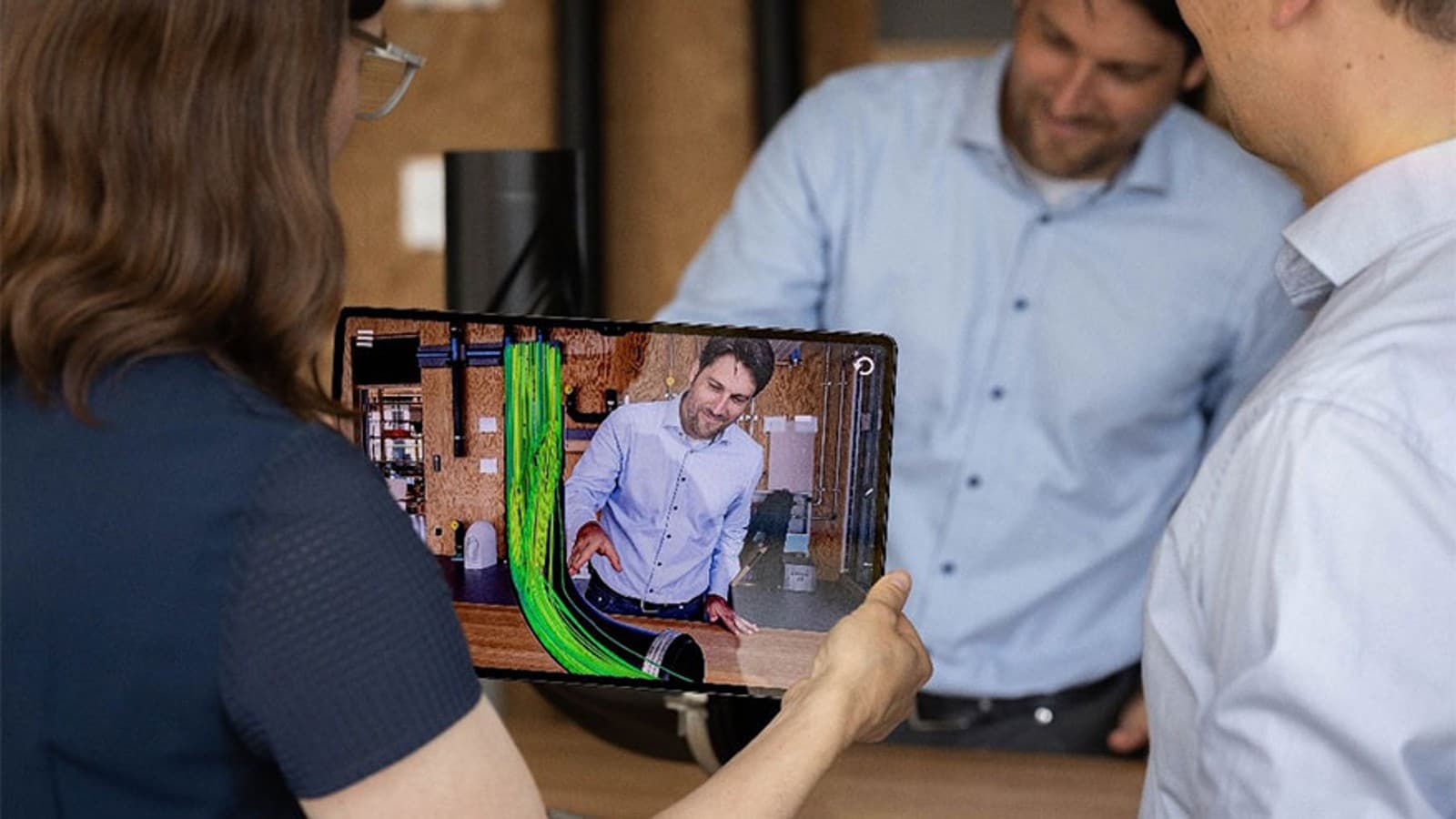
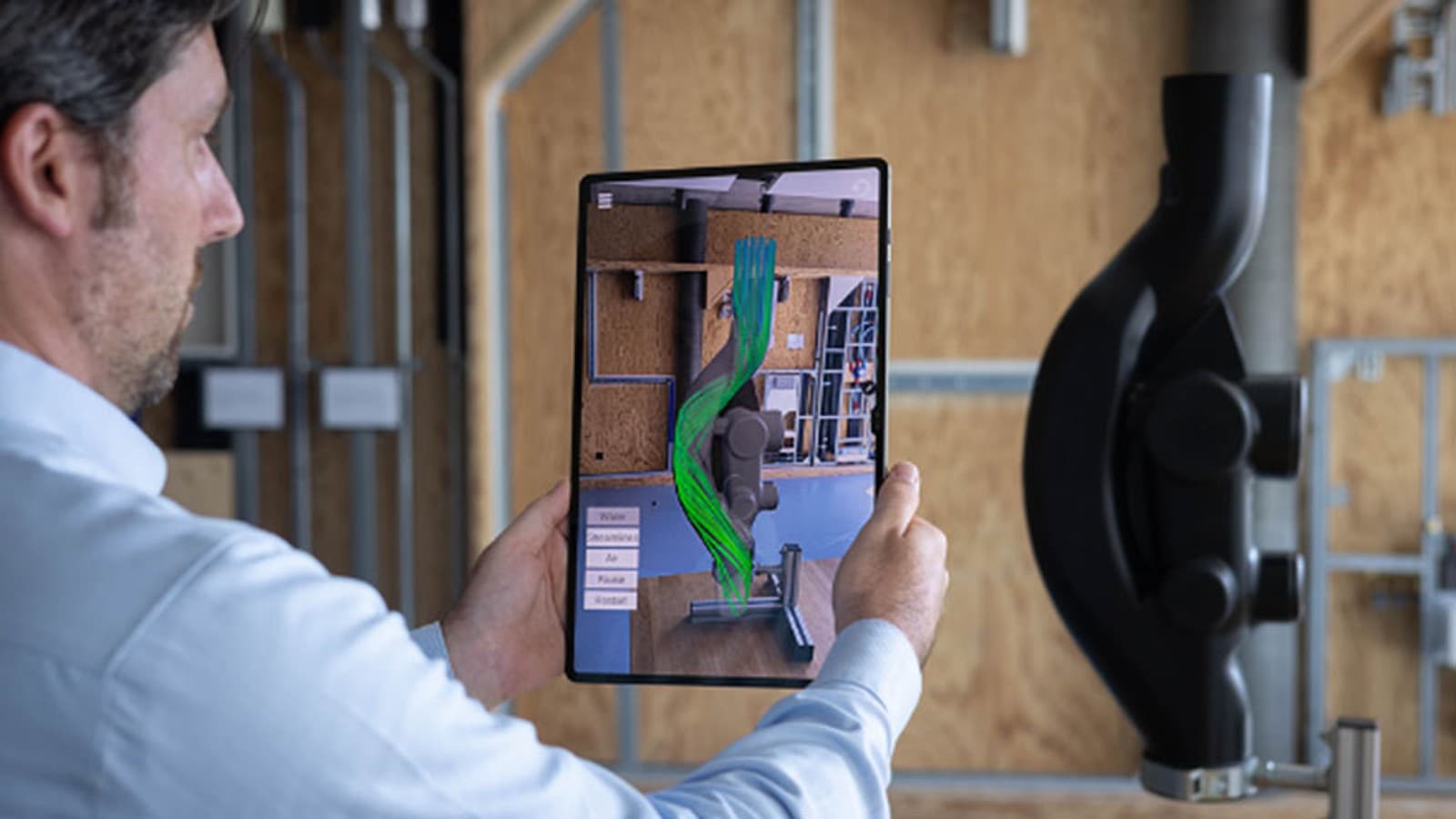
Together with his team of eight, the qualified automotive engineer makes physical processes visible that often cannot be observed at all in real-world tests. Or, in his words: “We predict physical reality on the computer.” Simulations are used to create models that depict water and air flows, as well as mechanical stresses in components. Methods from computational fluid dynamics (CFD) and structural mechanics (FEM, Finite Element Method) are employed. These reveal how water, air, materials and components behave under different conditions.
The Virtual Engineering team works closely with the designers and developers of the product lines. Before prototypes are manufactured, countless test runs take place on the computer. This is made possible by a high-performance computing infrastructure at Geberit’s headquarters in Rapperswil-Jona (CH). More than 1,000 processors enable simultaneous simulation calculations round the clock.
This allows different approaches to be quickly compared and evaluated. According to Andrés Lorenz, this is particularly important during the concept phase. “At that stage, what counts most is speed and the sheer number of variants we can test.” This makes it easier to identify promising concepts and avoid conceptual dead ends.
The time saved compared to physical tests is immense. Whilst a simulation of water flow in a new toilet design takes three to four hours, a comparable physical test – including prototype construction – could easily take weeks or months.
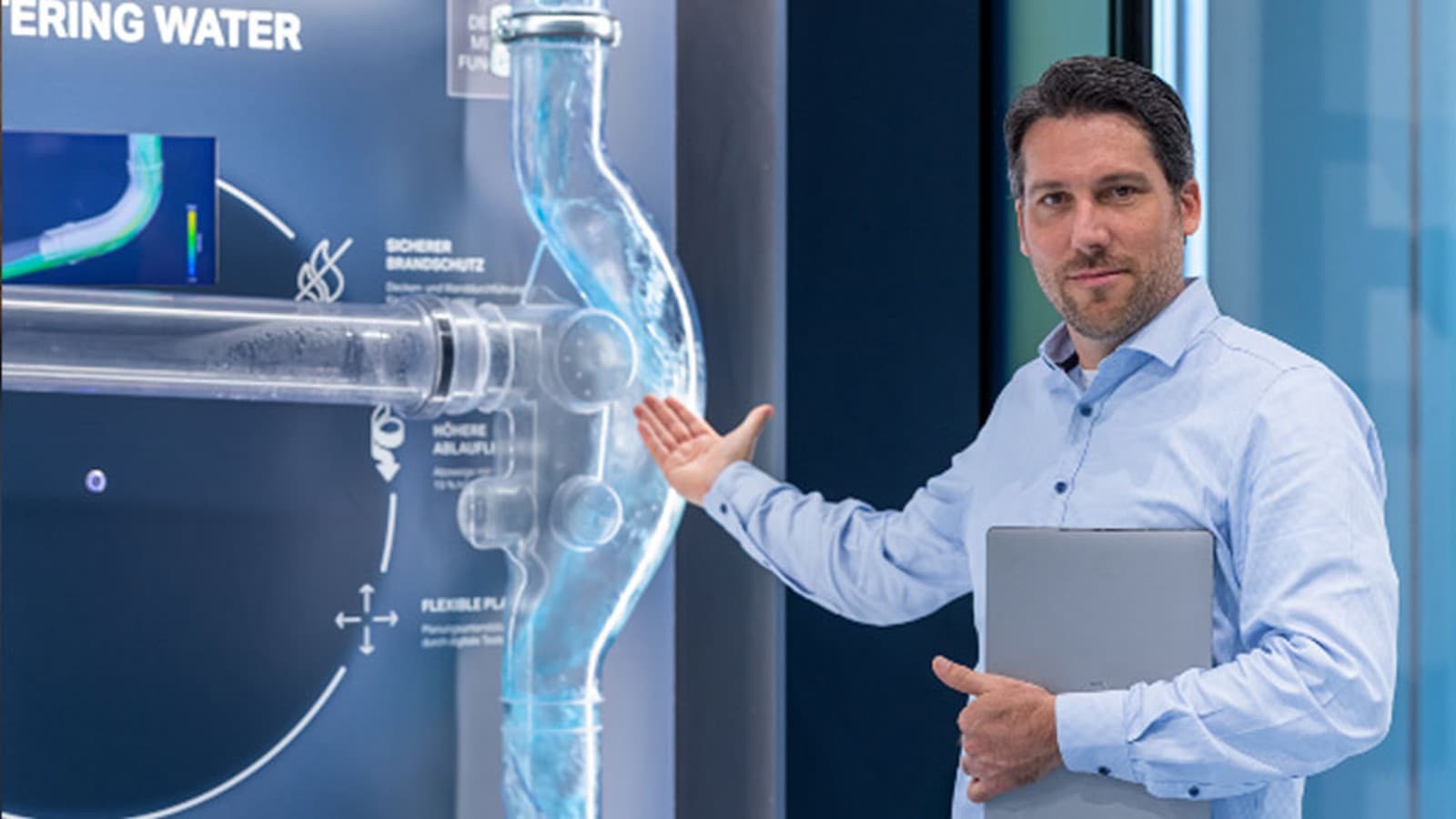
Virtual Engineering is particularly effective in the development of system solutions. “Simulations are excellent at demonstrating how individual products interact,” says Andreas Lange, Head of Products and a member of Geberit’s Group Executive Board. To this end, the Virtual Engineering team brings together expertise from various specialist areas and utilises it for cross-product analyses. “This makes a decisive contribution to strengthening our in-depth understanding of water flow and, consequently, our core competence ‘Mastering Water’,” says Andreas Lange.
One example of this is the Geberit WC system, in which the flushing technology and ceramic are optimally coordinated to enable a powerful, thorough and yet quiet flush. Digital simulations helped to make the Type 383 fill valve particularly quiet and to significantly increase the performance of the TurboFlush ceramic. Another example is the SuperTube drainage technology. Simulations supported the careful hydraulic tuning of all components. Only in this way can the characteristic air column in the drainage pipe be maintained at all times, thereby ensuring the performance of the SuperTube technology.
From production to the finished product.
Virtual engineering not only supports product development but also the optimisation of manufacturing processes in plastics and metalworking, as well as in ceramics production. By simulating entire production lines, the efficiency and stability of manufacturing processes are improved – with a decisive advantage for the resulting product quality.
What did you bring with you from Formula 1 to Geberit?
Andrés Lorenz: Above all, a curiosity to improve products holistically. At Geberit, I very quickly introduced the simulation methodology and the high level of automation from motorsport. Today, many steps in the process leading up to the final simulation at Geberit are automated, whereas they used to be carried out manually. The CAD models are prepared for simulation, automatically calculated on our computer cluster, visualised and converted into reports. This means we spend less time on repetitive tasks and can focus more on the crucial task: interpreting the results correctly and understanding the underlying physics in detail.
What role does artificial intelligence play in Virtual Engineering today?
Andrés Lorenz: AI primarily supports us with programming and automation. It does not yet play a major role in the actual physical simulation process. AI is very good at recognising existing patterns and further developing known solutions. However, when it comes to new sanitary solutions, we are often venturing into uncharted territory. This requires the knowledge and experience of engineers who not only understand the physics but also take manufacturability, costs and customer benefits into account.
Where else is Virtual Engineering used at Geberit, apart from in product development?
Andrés Lorenz: Manufacturing processes are a key area of application. For example, we simulate extrusion processes, ceramic filling processes, and their drying and firing processes. For the manufacture of plastic pipes, for instance, we geometrically optimised the extrusion die and were thus able to significantly reduce pressure losses with the aid of simulation. The result is a more efficient process and lower power consumption by the plant. The approach is always similar, regardless of the product. First, the problem must be understood in detail before it can be solved holistically.
Press enquiries
WAA Chosen
Wrens Court
58 Victoria Road
Sutton Coldfield
West Midlands
B72 1SY
Email: geberit@waachosen.co.uk
Tel: 0121 321 1411
For urgent press enquiries only please contact:
Jo Medlicott: 07788 9100 59